von Thimo Hofner
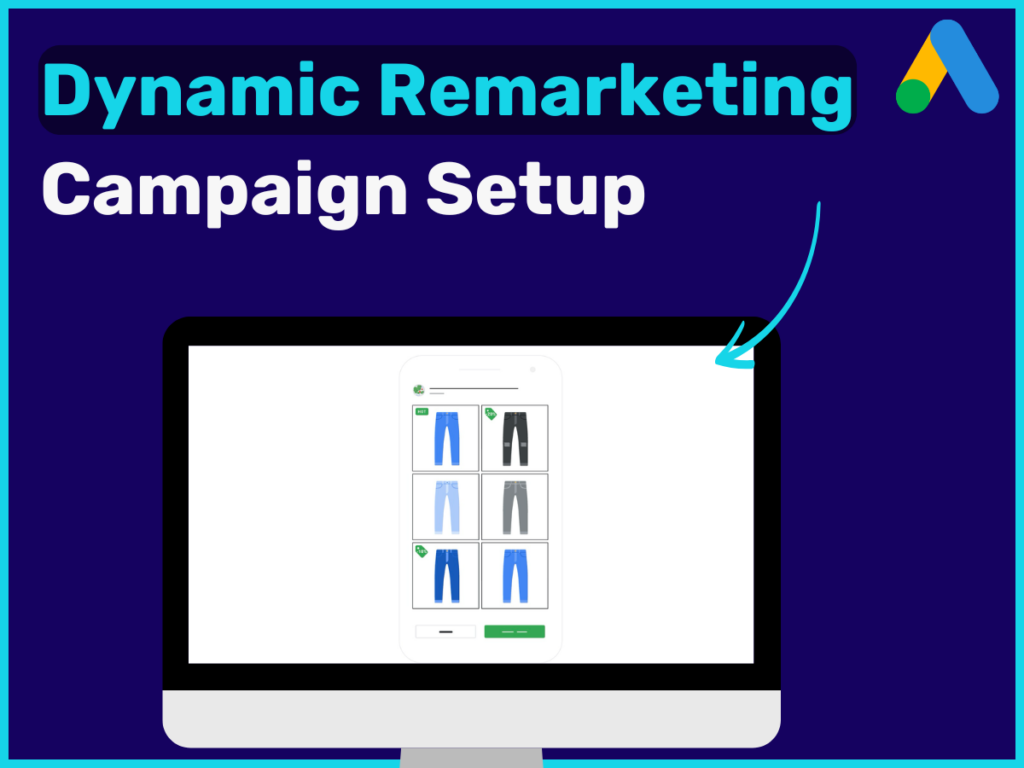
Dynamic Remarketing in Google Ads sounds simple at first: you automatically show users exactly the products that they have previously viewed in your store. In practice, however, your campaign and audience setup determines whether this really works properly.
In this article, I’ll show you how to set up and control Dynamic Remarketing in Google Ads correctly: which campaign types can do this, how to build target groups sensibly and how you can tell whether it really works.
Quick info: If you’re looking for the technical tracking setup (GTM, data layer, parameters, consent), I’ve explained it step by step here:
Dynamic Remarketing Setup with GTM
The classic dynamic remarketing campaign is a display campaign in which you activate Dynamic Ads and link the appropriate Merchant Center feed.
For pure remarketing, only your own remarketing segments must be selected and Optimized Targeting remains deactivated.
For Dynamic to really display products, feed data must be complete and the product IDs from the tracking must match the ID in the Merchant Center feed 1:1.
Dynamic remarketing means that users see ads with exactly the products that they have already viewed in your store. The product information such as title, image and price comes from your Merchant Center feed. Google then automatically compiles the ad and customizes it for each user.
The difference to normal remarketing is important because it explains why the setup is so critical:
Dynamic Display Remarketing campaign
This is the classic way. You link your Merchant Center feed and create Responsive Display Ads. Google pulls the appropriate products from this and displays them to your remarketing target groups. You can control very clearly who sees the ads and who doesn’t.
Performance Max
PMax has a special position. PMax can display formats that use product data. These include shopping formats and dynamic ads in the display context. The difference to the display remarketing campaign is the control: you cannot set it up so “hard” as pure remarketing because PMax is always optimized across channels and is not just limited to your remarketing lists.
Demand Gen
Demand Gen can also use Merchant Center product feeds and display product ads in a carousel. This is “feed ads” within Demand Gen rather than the classic dynamic display remarketing logic. This can work very well as a supplement if you also want to cover Discover, YouTube and Gmail.
Tracking is the heart of Dynamic Remarketing. Without proper tracking, Google cannot recognize which products someone has viewed. And without this information, Google cannot put together suitable product ads.
For it to work properly, these building blocks must be in place:
I explain the complete GTM setup (feed, data layer items, tag configuration and consent) in this article.
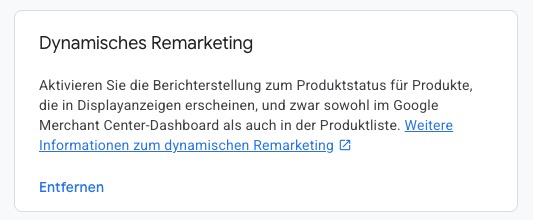
Important: Make sure that you have activated the Dynamic Remarketing option in the Google Merchant Center, otherwise your products cannot be displayed dynamically. To do this, check whether you have activated the corresponding function under Settings > Add-ons:
Dynamic Remarketing stands and falls with your target groups. Google can personalize products, but you still have to determine who you want to target.
In Google Ads, you can build remarketing target groups in roughly three ways:
view_item, add_to_cart or purchase. This is usually more stable and closer to your real funnel logic.Important as a reality check: If your segments are too small, they will not be delivered. You need a minimum size, especially for display, otherwise the campaign will simply remain empty.
A typical segment is “Add to Cart – last 30 days”:
Almost always useful: Exclude buyers so that you don’t waste budget on users who have just ordered.
This can vary depending on the store. For consumer goods or subscription models, you would often not exclude buyers immediately or only with a time delay.
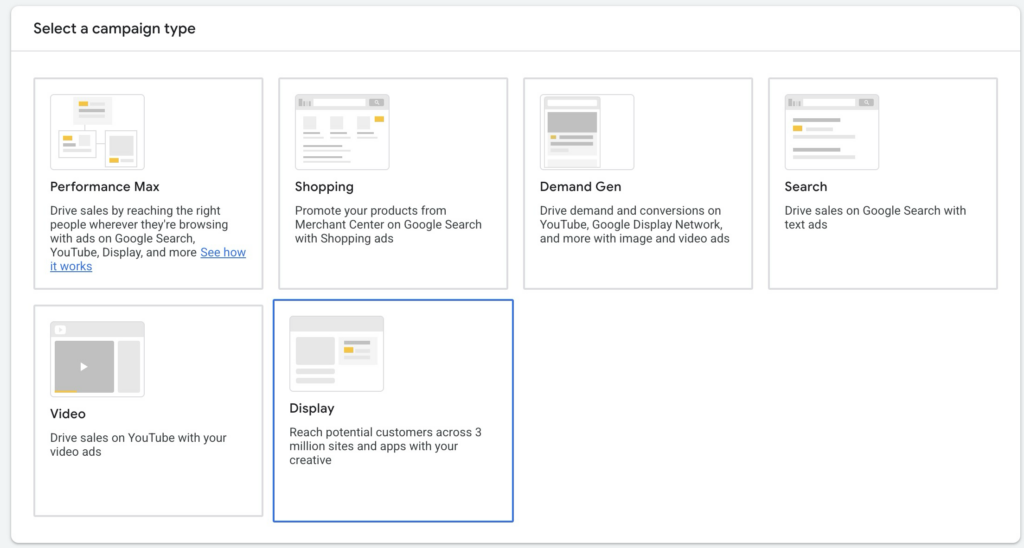
A dynamic display remarketing campaign is the classic way to use dynamic remarketing. You link your Merchant Center feed and play responsive display ads that are automatically filled with suitable products from the feed.
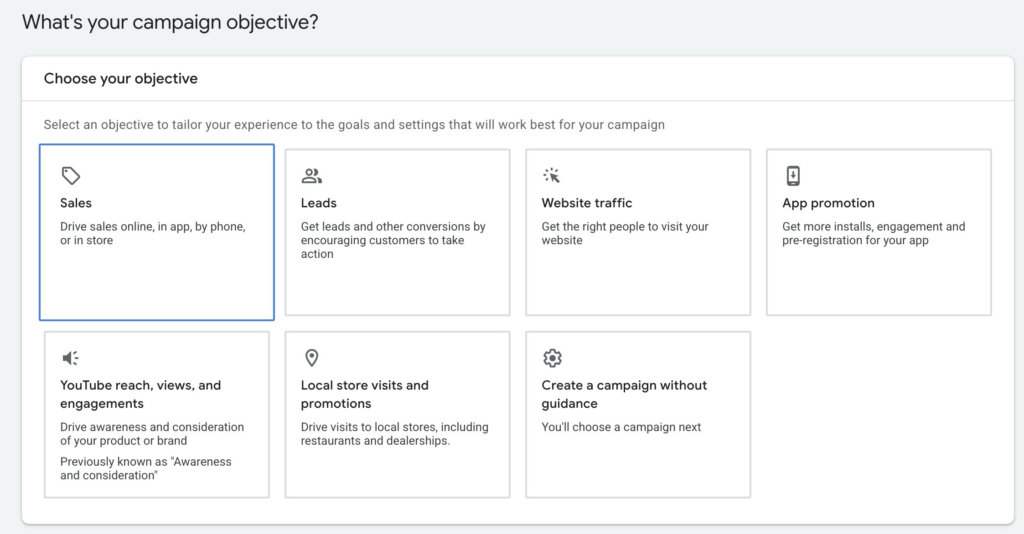
Select campaign type Display.
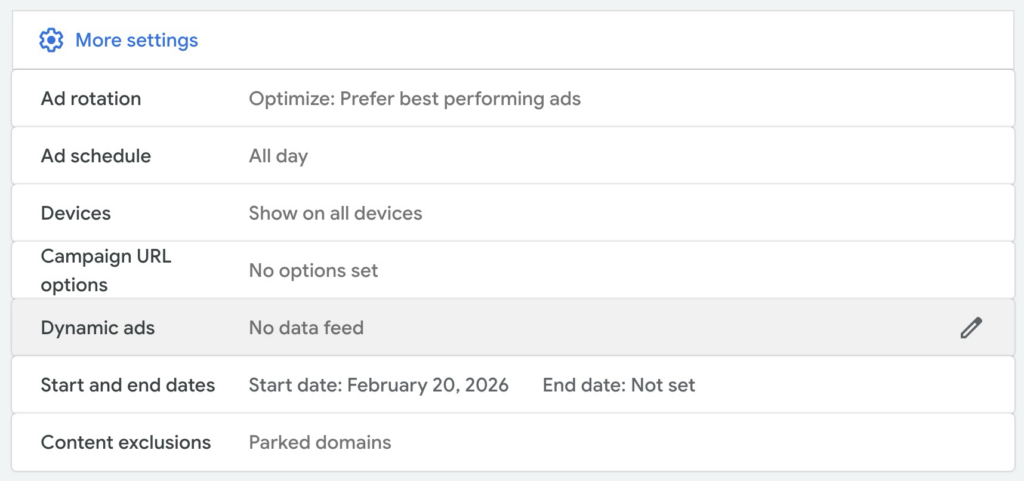
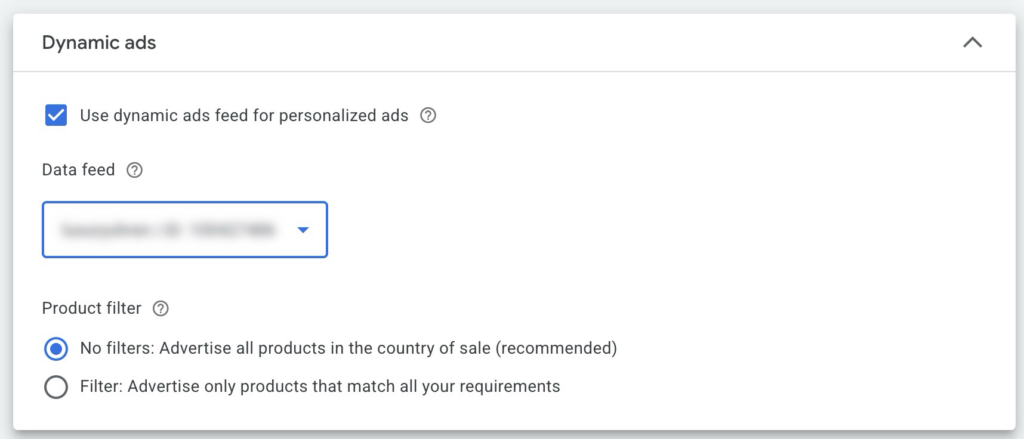
Select the appropriate Merchant Center feed and set a product filter if required.
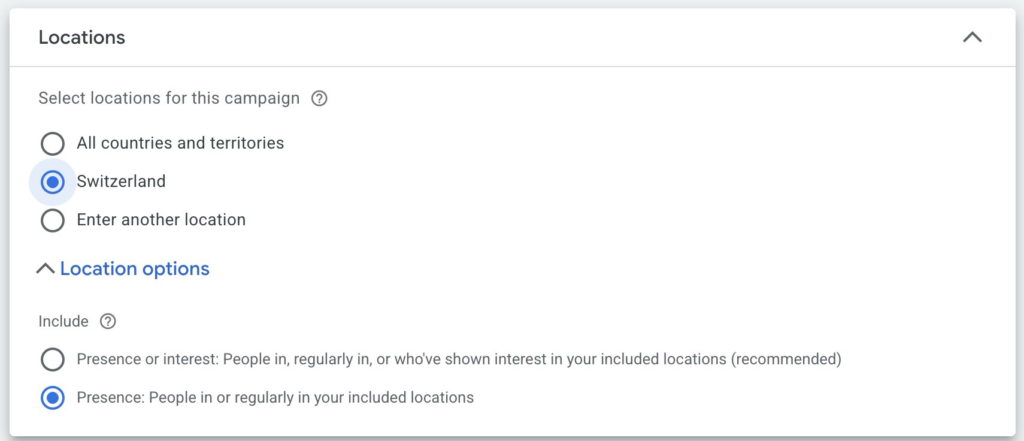
1) Location: switch to presence
In the location options, you should set to Presence. This allows you to reach users who are actually in your target region and not people who only show “interest” in a location.
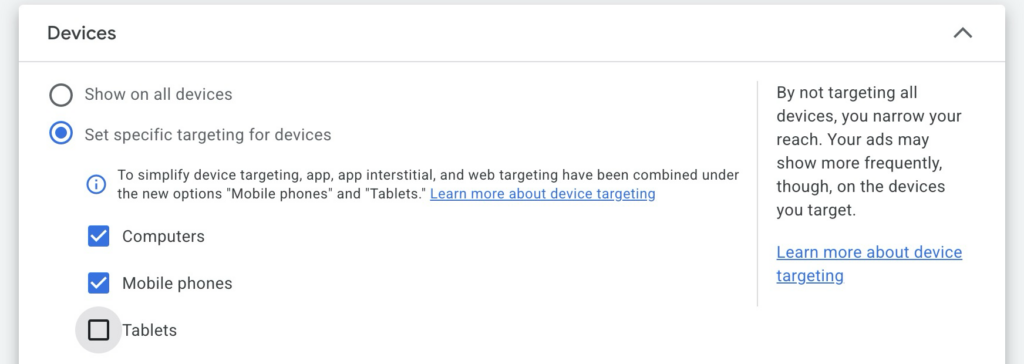
2) Devices: Exclude tablets
You can deactivate tablets under Devices. This is not a must, but often a quick hygiene step because tablets perform less well in most accounts.
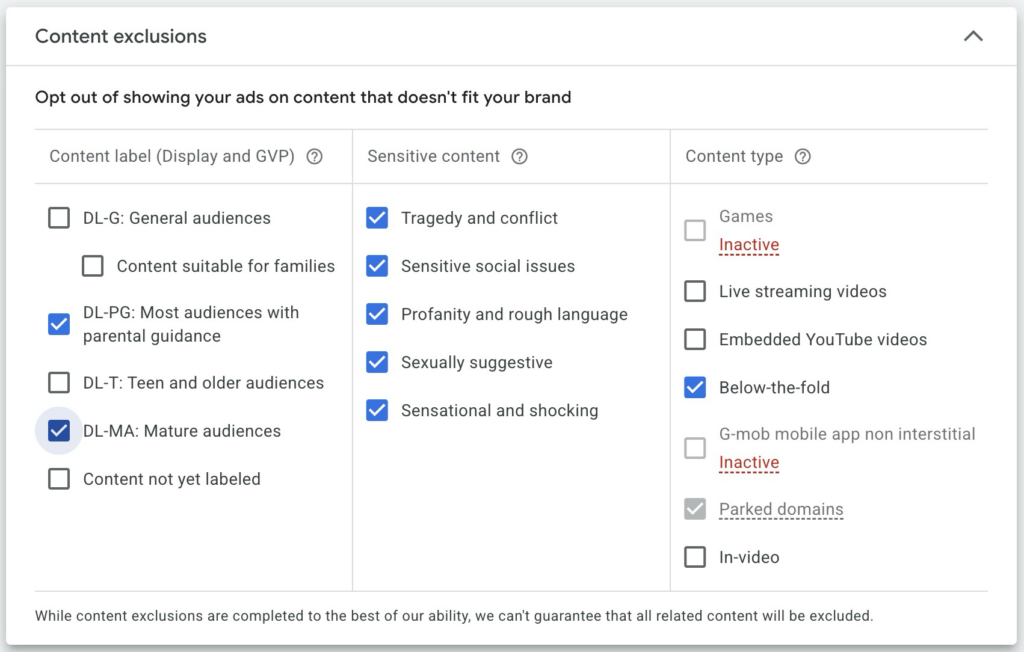
3) Content exclusions: consistently clean up
You can find this in the campaign settings under Content exclusions. In 99% of cases, I exclude all “sensitive content” here so that your ads do not run alongside tragedies, conflicts, shocking or sexualized content.
The same principle applies to content labels: if your brand doesn’t fit with “Mature” or “Parental guidance”, exclude these labels and start conservatively. You can always release more reach later.
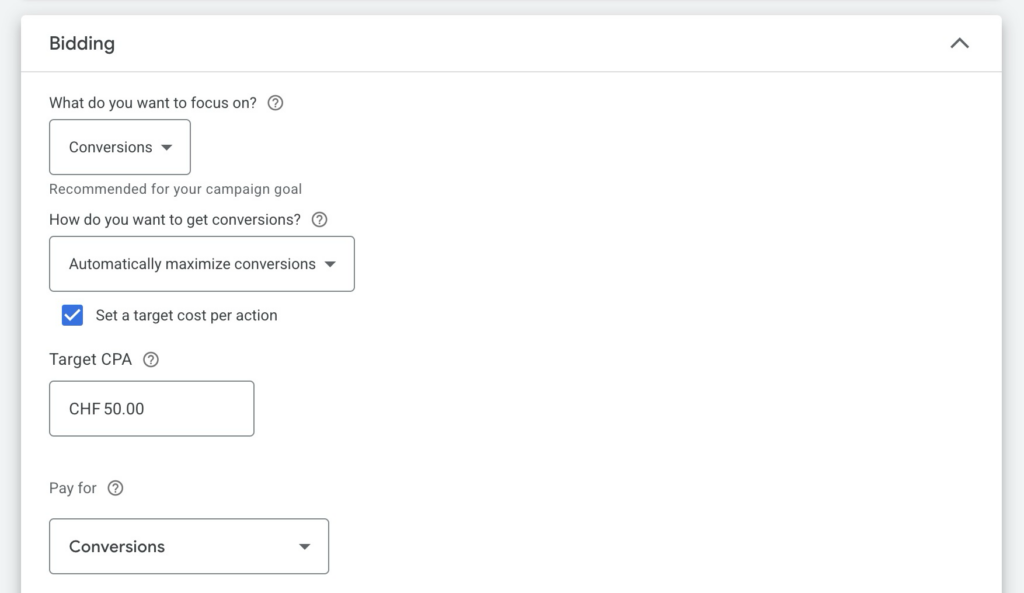
Smart bidding is the better choice for display in most cases. If display is optimized for clicks, there is often a lot of traffic with low purchase intent. Smart bidding steers playout more towards users who are more likely to convert.
At this point, you must ensure that the campaign is only delivered to your remarketing target group.
In the ad group, you only select your segment under Audience segments. You will find it in the “How they have interacted with your business” area. This is exactly where your website-based remarketing lists such as shopping cart abandoners or product viewers are located.
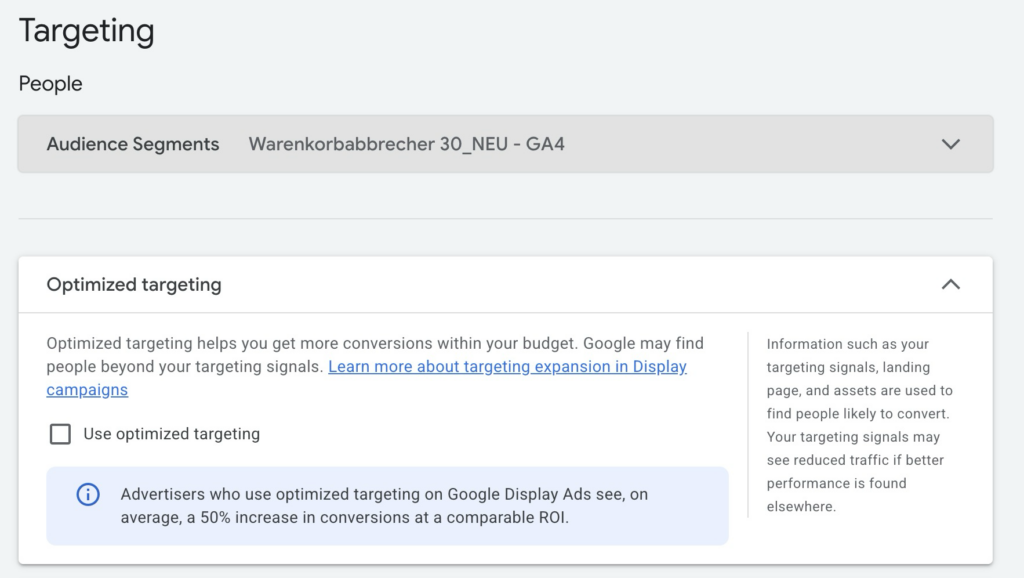
Important: Optimized targeting must be deactivated. As soon as it is active, Google extends the display beyond your list. It is then no longer a pure remarketing campaign.
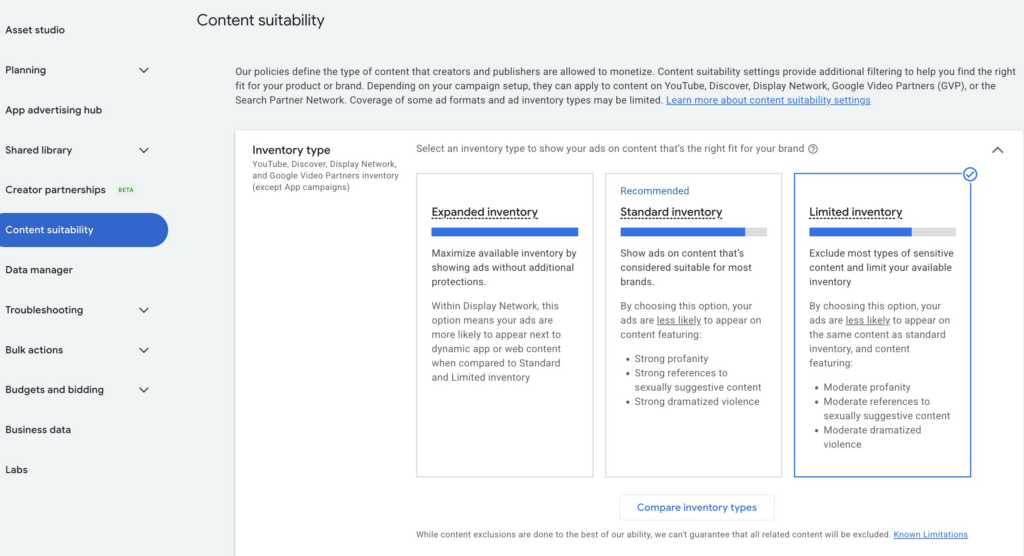
Set content suitability to “Limited”
This reduces the risk of your ads running alongside questionable or inappropriate content. For most e-commerce brands, “Limited” is the sensible standard.
Exclude app placements in 99% of cases
App inventory is often low-intent and can burn through budget. Therefore, consistently exclude apps if the goal is clean remarketing with purchase intent.
This is the classic approach for dynamic remarketing. You link your Merchant Center feed and use Responsive Display Ads, which are automatically filled with suitable products from the feed. The biggest advantage is control: you can control very clearly that only your remarketing target groups are addressed, and you generally have more options for exclusions and brand safety settings in the display setup.
Performance Max uses your Merchant Center feed for more than just classic Shopping ads. Depending on the playout, other formats can also use product data, for example in the display environment when Google displays products dynamically.
It is important to note: Performance Max is not a campaign that you can set up as pure remarketing. The optimization runs across all channels and cannot be strictly limited to your remarketing lists as with a classic display remarketing campaign. Product data and remarketing effects can therefore be part of the playout, but cannot be controlled as clearly as in the display setup.
If you want to check how much product data is used in PMax, the Channel Performance Report can help. There you can filter according to the format Ads using product data and see what proportion of these ads are used and how they perform.
Demand Gen can also be set up as a pure remarketing campaign by using only your own data segments as the target group, for example website visitors or shopping cart abandoners. As long as no additional segments or extensions are activated, playout remains limited to these users.
The difference to the classic Dynamic Display Remarketing campaign lies less in the feed than in the playout: In Demand Gen, you use the Merchant Center feed primarily as a product asset, often as a product carousel in Demand Gen placements such as Discover, YouTube and Gmail. These are feed-based product ads within Demand Gen, while Display Dynamic Remarketing is designed more for the classic retargeting logic in the display network.
If Dynamic Remarketing does not work or only works poorly, it is rarely due to a single point. In practice, there is usually a problem in one of five areas. If you go through the checks in a clear order, you will find the cause much more quickly.
A problem may be with the feed, for example if products are rejected, data is out of date or the wrong Merchant Center account has been linked. It can also be due to tagging if events are not firing properly or important parameters are missing.
Very often it is a matching problem. In this case, the product ID sent in the tag does not match the ID in the feed exactly. In this case, Google cannot reliably assign the products. Audience problems are also common if target groups do not build up or are too small. And finally, campaign settings can also be to blame, for example if Dynamic Ads is not active, the wrong feed has been selected or Optimized Targeting is still switched on.
1. Check feed
First open the Merchant Center and check whether the feed is active and whether the products are approved. Also make sure that the price and availability are up to date. If products are rejected, Google cannot use them for dynamic ads.
2. Check tag and events
Next, you should check whether the dynamic remarketing events and parameters arrive in Google Ads at all. You can do this directly in Google Ads under Tools, then Data Manager, then Google Tag and View stats. If no relevant parameters appear there, something is wrong in the tag setup or in the event triggering.
3. Check matching between tag and feed
Then comes the most important step: ID matching. The product ID that you transfer in the tag must correspond exactly to the ID in the Merchant Center feed. If the format is not identical, the matching rate will be poor. As a result, Google often shows fallback assets or hardly delivers the campaign.
Remember: If the ID in the tag is not identical to the feed ID, dynamic remarketing will always be shaky.
4. Check target groups
You should then check whether your remarketing lists are large enough and are filling up at all. If there is too little traffic or the tracking is not running properly, the segments will remain small and Display will not deliver. This is why the minimum list size is always an important reality check.
5. Check campaign settings
Finally, a quick campaign check is worthwhile. Make sure that Dynamic Ads is really activated and the correct feed has been selected. Also check that Optimized Targeting is deactivated if you want pure remarketing. In addition, app placements should be excluded and content suitability should be set appropriately so that you don’t suffer any unnecessary wastage.
Dynamic remarketing is one of the most useful methods in e-commerce for retargeting lost buyers. The decisive factor here is not just any old trick, but a clean interplay of feed, tracking, target groups and the right campaign settings.
If you only want to take three things with you, then these are it:
For pure remarketing, your target groups must be cleanly selected and Optimized Targeting remains deactivated.
The feed must be complete and up-to-date, otherwise there will be no good product ads.
The tracking must reliably transfer product IDs to Google Ads, otherwise the matching will break.
Thank you for reading this far. Good luck with your remarketing campaigns.
Work smart with Clicks in Mind

Hi, my name is Thimo Hofner. I have been working in online marketing as a Google Ads Manager for more than 5 years. Through many courses, trainings and most importantly working with many different clients, I have learned the best strategies for success with Google Ads. On my blog and YouTube, I share my knowledge to help you drive more success with online marketing.

Driving Your Success Through Smart Online Marketing.
As a reliable partner, I can help your company generate more customers and sales with Google Ads. After more than 5 years as a Google Ads Manager and more than $1.2 million in managed advertising budgets, I can quickly recognize where you need to make adjustments to get more out of your budget.


© 2026 Clicks in Mind